Samba Rise
JAIRZINHO
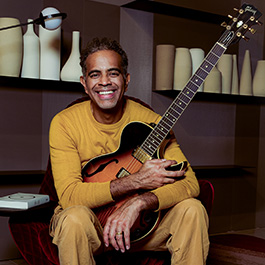
Jair Oliveira, often known earlier as Jairzinho, is a Brazilian singer, songwriter, multi-instrumentalist, and music producer whose career spans child stardom, formal training abroad, and a long adult output that blends samba, MPB, soul, and contemporary production. Born on 17 March 1975 in São Paulo, he is the son of the late singer Jair Rodrigues (1939–2014) and the brother of singer Luciana Mello. Music was the family language from the start. He began performing with his father as a small child and later recalled that he and his sister were “fed samba in their baby bottles.”
Balão Mágico on Rede Globo.

In the early 1980s he became a co-star of the children’s television program Balão Mágico on Rede Globo. The cast also formed the musical group Turma do Balão Mágico, which sold millions of records and became one of the defining pop phenomena of Brazilian childhood in that decade. After the group ended, he continued for a time in partnership with Simony before stepping away from the spotlight to study. In the 1990s he moved to the United States and enrolled at Berklee College of Music in Boston, graduating in 1998 with degrees focused on Music Production & Engineering and Music Business. The training shaped the rest of his career: he returned not only as a performer but as a producer and studio craftsman.
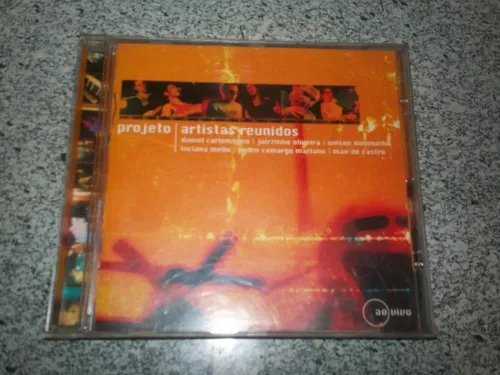
Projeto Artistas Reunidos,
Back in Brazil he co-founded Projeto Artistas Reunidos, a collective that brought together children of well-known Brazilian musicians—including his sister Luciana Mello, João Marcelo Bôscoli, Pedro Mariano, Daniel Carlomagno, Max de Castro, and Wilson Simoninha. The project fused classic samba and bossa nova with soul, funk, and electronica, reflecting a generational desire to update Brazilian popular music without abandoning its roots. Oliveira’s own solo work on the Trama label followed a similar direction. Albums such as Dis’ritmia, Outro, and the paired releases 3.1 and 3.2 established him as a writer and producer of contemporary MPB that carried the swing of samba inside polished arrangements. Later independent work on the S de Samba label, of which he is a partner, included Simples and the 2019 album Selfie, the latter nominated for a Latin Grammy for Best Portuguese Language Contemporary Pop Album.
JAIR THE PRODUCER

He has also worked extensively behind the console. He produced several of his father’s later albums, including volumes of 500 Anos de Folia and Samba Mesmo, and has credits with artists ranging from his sister to Tom Zé and others. In interviews he has spoken of pride in his father’s role in launching or supporting figures such as Alcione and Martinho da Vila, and of his own continuing relationship with the genre. He has described samba as inherently social—“only the Brazilian can really make it”—and has kept it central even after moving, around 2017, to the United States with his family. There he has introduced his daughters to rodas de samba and continues to record and produce.
Oliveira has been married to the actress Tania Khalill since 2005; they have two daughters, Isabella and Laura. His path is unusual in Brazilian music: a former child star who chose formal technical study, then built a career that is equal parts performance, composition, and production. The result is a body of work that sits between the tradition he inherited from his father and the contemporary sound he studied and refined in Boston and in Brazilian studios. At fifty-one he remains active as both artist and producer, still circulating between the samba he grew up with and the broader pop and electronic textures he has long explored